Comprehensive Guide to Bearings
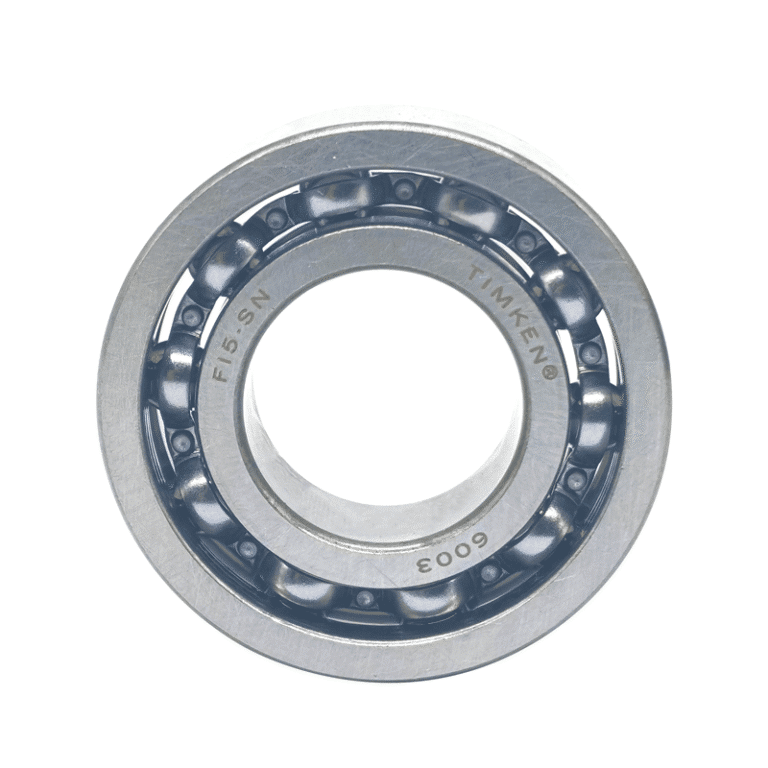
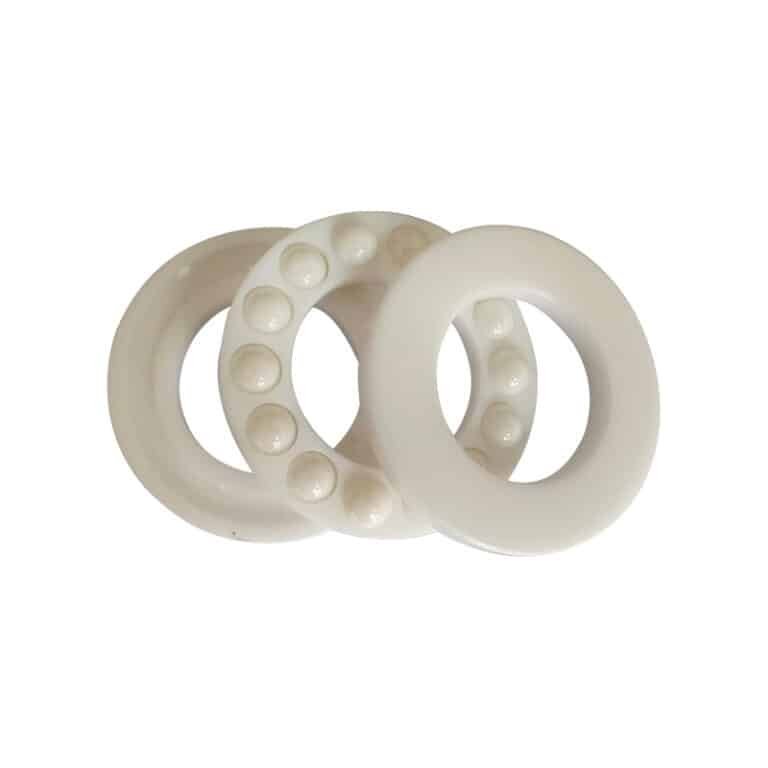
Bearings generally consist of an inner ring, outer ring, rolling elements, and a cage. For sealed bearings, lubricant and a seal (or dust cover) are added. This constitutes the entire bearing assembly.
Selecting the appropriate bearing type based on operating conditions ensures optimal performance and extended service life. Key factors to consider when choosing bearings include:
1. Radial load 2. Axial load 3. Speed requirements 4. Radial runout
5. Axial runout 6. Operating temperature 7. Noise requirements 8. Lubrication conditions
Bearing Designation
Bearing model numbers typically consist of a prefix, a basic designation, and a suffix. Generally, only the basic designation is used to represent the bearing model. The basic designation usually comprises three parts: type code, size code, and inner diameter code. The suffix uses letters and numbers to indicate special requirements for the bearing’s structure, tolerances, and materials. The prefix denotes the bearing’s components and is represented by letters.
General Bearing (Rolling Bearing) Designation Methodology: Prefix, Basic Designation, and Suffix.
Basic Designation
The basic designation indicates the bearing’s inner diameter, diameter series, width series, and type. It typically consists of up to five digits, detailed as follows:
1) The bearing inner diameter is indicated by the first digit from the right in the basic designation. For bearings with common inner diameters d = 20–480 mm, the inner diameter is typically a multiple of 5. These two digits represent the quotient when the bearing inner diameter is divided by 5. For example, 04 indicates d = 20 mm; 12 indicates d = 60 mm, and so on. For bearings with inner diameters of 10 mm, 12 mm, 15 mm, and 17 mm, the inner diameter designations are 00, 01, 02, and 03, respectively. For bearings with inner diameters less than 10 mm or greater than 500 mm, separate designation methods apply as specified in GB/T 272-93.
2) The diameter series of bearings (i.e., variations in outer diameter and width for bearings with identical structure and inner diameter) is indicated by the third digit from the right in the basic designation. For radial bearings and radial thrust bearings, 0 and 1 denote the extra-light series; 2 denotes the light series; 3 denotes the medium series; and 4 denotes the heavy series. The dimensional comparison between series is shown in the figure below. For thrust bearings, the extra-light series is denoted by 1; otherwise, the designation follows that of radial bearings.
3) The width series of bearings (i.e., the variation series in width for bearings with identical structure, inner diameter, and diameter series) is indicated by the fourth digit from the right in the basic designation. When the width series is the 0 series (standard series) for diameter series comparison (as shown in Figure 13-4), the width series code 0 may be omitted from the designation for most bearings. However, for spherical roller bearings and tapered roller bearings, the width series code 0 must be specified. Both the diameter series code and width series code are collectively referred to as the size series code.
4) Bearing type codes are indicated by the fifth digit from the right in the basic designation (for types like cylindrical roller bearings and needle roller bearings, the type code is an alphabetic character).
Suffix Codes
Bearing suffix codes use letters and numbers to denote special requirements for bearing structure, tolerances, materials, etc. Suffix codes cover numerous specifications; several commonly used codes are introduced below.
1) Internal structure designations denote different internal configurations within the same bearing type, indicated by letters immediately following the basic designation. For example: Angular contact ball bearings with contact angles of 15°, 25°, and 40° are designated as C, AC, and B, respectively, to indicate their differing internal structures.
2) Tolerance grades are divided into 6 levels: Grade 2, Grade 4, Grade 5, Grade 6, Grade 6X, and Grade 0. These are ranked from highest to lowest precision, denoted by the codes /PZ, /P4, /PS, /P6, /P6X, and /PO respectively. Among these grades, 6X applies exclusively to tapered roller bearings; 0 denotes the standard grade and is not explicitly marked in wheel bearing designations.
3) Common radial clearance series for bearings are categorized into 6 groups: Group 1, Group 2, Group 0, Group 3, Group 4, and Group 5, with radial clearance increasing sequentially. Group 0 clearance is the standard and is not specified in the bearing designation. Other clearance groups are indicated in the bearing designation as follows: /CI for Group 1, /CZ for Group 2, /C3 for Group 3, /C4 for Group 4, and /CS for Group 5. /CS.
Prefix Codes
Bearing prefix codes denote component parts, represented by letters. For example, L indicates a separable ring for separable bearings, while K denotes the rolling element and cage assembly.
Numerous rolling bearing types exist in practical applications, resulting in relatively complex bearing designations. The codes introduced above represent the most fundamental and commonly used components of bearing designations. Familiarity with these codes enables identification and selection of standard bearings. Detailed rolling bearing designation methods can be found in GB/T 272-93.
Methods for Selecting Bearings
The market demands for performance in various mechanical devices and instruments utilizing rolling bearings are becoming increasingly stringent, while the conditions and performance required of bearings are also growing more diverse.
To select the most suitable bearing from numerous structural and dimensional options, comprehensive analysis from multiple perspectives is essential. When choosing bearings, the bearing arrangement within the shaft system, ease of installation and removal, available space and dimensions, and market availability are generally considered to determine the basic bearing structure.
Subsequently, bearing dimensions are determined by comparing the design life of the machinery with the various endurance limits of the bearings. While fatigue life is often the primary focus during selection, thorough consideration must also be given to grease life, wear, noise, and other factors arising from grease aging.
Furthermore, depending on the application, it may be necessary to select bearings specially designed to meet specific requirements for precision, clearance, cage structure, lubricant, etc. However, there is no fixed sequence or rule for bearing selection. The most practical approach is to prioritize the conditions and performance requirements most relevant to the bearing’s intended use.
Precautions for Bearing Use
Rolling bearings are precision components that require careful handling during use. Even the highest-performance bearings will fail to deliver expected performance if used improperly. The following precautions must be observed:
(1) Maintain cleanliness of bearings and surrounding areas.
Even microscopic dust particles invisible to the naked eye can adversely affect bearings. Keep the environment clean to prevent dust ingress.
(2) Handle with care.
Subjecting bearings to strong impacts during use can cause scratches and indentations, leading to failures. In severe cases, cracks or fractures may occur, so caution is essential.
(3) Use appropriate tools.
Avoid substituting with improvised tools; always use the correct tools for the task.
(4) Prevent bearing corrosion.
Hand sweat can cause rust during bearing handling. Always handle bearings with clean hands; wearing gloves is recommended whenever possible.
Correct Bearing Installation Methods
The accuracy, service life, and performance of bearings depend on proper installation. Therefore, design and assembly departments must thoroughly study bearing installation procedures. Installation should strictly follow operational standards. Typical operational standard items include:
(1) Clean the bearings and related components
(2) Inspect the dimensions and finish of related components
(3) Installation
(4) Post-installation inspection
(5) Lubricant supply
Before installation, open the packaging. For grease-lubricated bearings, typically no cleaning is required; grease can be filled directly. For oil-lubricated bearings, cleaning is generally unnecessary. However, for precision instruments or high-speed applications, clean the bearings with a clean oil to remove the rust inhibitor coating. Bearings stripped of rust inhibitor are prone to rusting and must not be left unattended. Furthermore, bearings pre-filled with grease should be used without cleaning.
Bearing installation methods vary based on bearing structure, fit, and conditions. Generally, since shaft rotation is common, the inner ring requires an interference fit. For cylindrical bore bearings, press-fitting using a press or hot mounting is often employed. For tapered bore bearings, direct mounting onto a tapered shaft or using a sleeve is typical. When mounting to housings, most installations involve a clearance fit with an interference fit for the outer ring. This is typically achieved by press-fitting or, alternatively, by a cold-shrink fit after cooling. When using dry ice as a coolant for cold-shrink fitting, moisture from the air may condense on the bearing surface. Therefore, appropriate rust prevention measures are necessary.
Bearing Maintenance Methods
To maintain bearings in optimal condition for as long as possible, regular maintenance and inspections are essential to prevent failures, ensure operational reliability, and enhance productivity and cost-effectiveness. Maintenance should be performed periodically according to operational standards tailored to the specific machinery’s running conditions.
Maintenance tasks include monitoring operational status, replenishing or replacing lubricants, and conducting periodic disassembly inspections. During operation, key inspection points include bearing rotation sounds, vibration levels, temperature readings, and lubricant condition.
Bearing Lubrication
The purpose of lubricating rolling bearings is to reduce internal friction and wear, prevent seizure, and achieve the following lubrication benefits:
(1) Reduce friction and wear.
Prevent metal-to-metal contact at the points where the bearing rings, rolling elements, and retainers interact, thereby minimizing friction and wear.
(2) Extend fatigue life.
The rolling fatigue life of a bearing increases when the rolling contact surfaces are well lubricated during rotation. Conversely, it decreases if oil viscosity is too low or the lubricating oil film thickness is inadequate.
(3) Dissipate frictional heat and cool.
Methods like circulating oil lubrication use oil to dissipate heat generated by friction or transferred from external sources, thereby cooling the bearing. This prevents overheating and inhibits the aging of the lubricating oil itself.
(4) Other Functions
Lubrication also prevents foreign particles from entering the bearing and inhibits rust and corrosion.
Bearing lubrication methods are categorized into grease lubrication and oil lubrication. To ensure optimal bearing performance, the lubrication method must first be selected based on operating conditions and application requirements. While oil lubrication offers superior lubricity when considering lubrication alone, grease lubrication simplifies surrounding bearing structures. The advantages and disadvantages of grease and oil lubrication should be compared.
Bearing Inspection and Maintenance Methods
Bearing Cleaning: When disassembling bearings for inspection, first document the bearing’s external condition and verify the remaining lubricant quantity. After sampling the lubricant for testing, proceed to clean the bearings. Common cleaning agents include detergents and kerosene. Disassembled bearings undergo coarse cleaning and fine cleaning. Place them in separate containers lined with a metal mesh pad to prevent direct contact with container debris.
During coarse cleaning, avoid rotating the bearings with contaminants attached, as this may damage the rolling surfaces. Use a brush to remove grease and adhesions from the coarse cleaning oil. Once largely clean, proceed to fine cleaning. Fine cleaning involves rotating the bearings in cleaning oil while meticulously washing them. Additionally, ensure the cleaning oil remains clean throughout the process.
Bearing Inspection and Evaluation: To determine if disassembled bearings are serviceable, inspect them after thorough cleaning. Examine the condition of raceways, rolling surfaces, and mating surfaces; assess cage wear; check for increased bearing clearance; and identify any damage or dimensional inaccuracies.
For non-separable small ball bearings, support the inner ring horizontally with one hand and rotate the outer ring to confirm smoothness. For separable bearings like tapered roller bearings, inspect the rolling elements and outer ring raceway surfaces separately. For large bearings that cannot be rotated by hand, carefully examine the appearance of rolling elements, raceway surfaces, retainers, and flange surfaces. The more critical the bearing, the more meticulous the inspection should be.