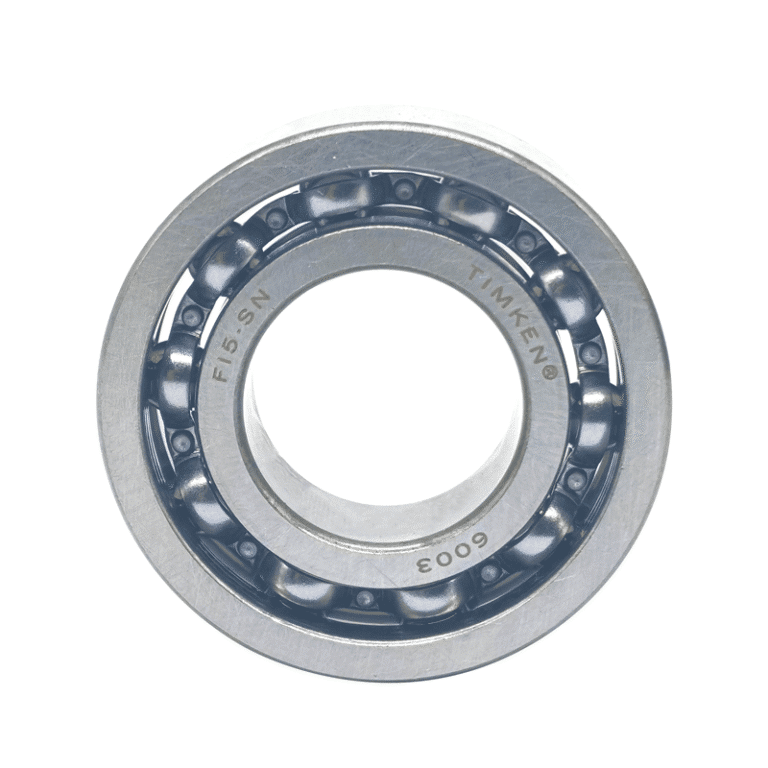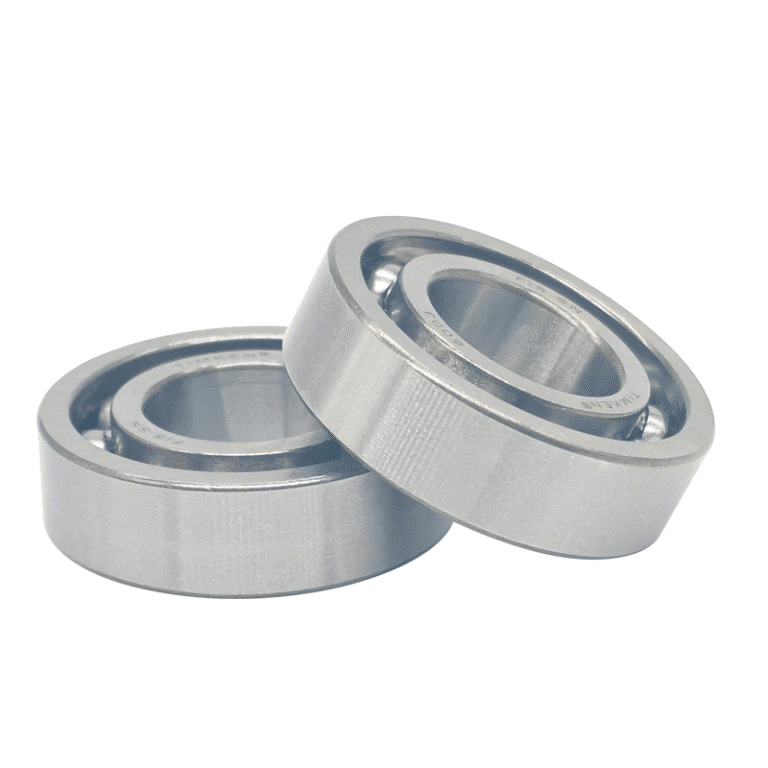
Applications of Thrust Ball Ceramic Bearings
Thrust ball ceramic bearings, as the name suggests, are specifically designed to withstand axial (thrust) loads. When their rolling elements (balls) and/or raceways are made from engineered ceramic materials (primarily silicon nitride Si3N4 or zirconia ZrO2), they exhibit unique properties that surpass traditional steel bearings.
Their primary applications focus on scenarios demanding high speeds, high temperatures, corrosion resistance, non-magnetic properties, extended service life, and low density (lightweighting).
Key application areas for thrust ball ceramic bearings include:
1. Aerospace and Industrial Robotics
This represents one of the earliest and most significant application domains for ceramic bearings.
* Jet Engines: Used in critical components like turbine pumps and auxiliary power units (APUs). The low density of ceramic balls reduces centrifugal forces during high-speed rotation, enabling higher rotational speeds; their high-temperature resistance allows stable operation in poorly lubricated or high-temperature environments.
* Missiles and Spacecraft: Employed in guidance systems, gyroscopes, and rudder control mechanisms. Their non-magnetic and corrosion-resistant properties prevent interference with precision electronic equipment.
* Unmanned Aerial Vehicles (UAVs): Employed in motor spindles to achieve high rotational speeds, lightweight construction, and extended endurance.
2. High-Performance Industrial Machinery and Machine Tools
* High-Speed CNC Machine Tool/Machining Center Spindles: To achieve extremely high cutting speeds, spindle rotational speeds can reach tens of thousands of revolutions per minute. All-ceramic bearings (Si3N4 balls + ceramic rings) or hybrid ceramic bearings (Si3N4 balls + steel rings) effectively reduce temperature rise and thermal deformation at high speeds, ensuring machining precision.
* Precision Grinding Machine Spindles: Requiring exceptional rotational accuracy and stability, ceramic bearings’ high rigidity and low thermal expansion coefficient enhance grinding quality.
3. Chemical and Marine Engineering
* Chemical pumps, corrosion-resistant pumps: Ceramic materials (especially Si3N4) exhibit exceptional resistance to chemical corrosion from acids, alkalis, salts, etc., making them ideal for pumps handling corrosive media (e.g., strong acids, alkalis). Their service life far exceeds that of conventional bearings.
* Seawater desalination equipment, marine vessels: Resistant to seawater corrosion, suitable for systems like seawater pumps and propulsion units.
4. Medical Equipment
* Dental Handpieces (Dental Drills): A quintessential application. Hybrid ceramic bearings withstand ultra-high rotational speeds (over 400,000 rpm) while offering self-lubrication. They withstand high-temperature, high-pressure sterilization, meeting medical equipment’s stringent cleanliness and durability requirements.
* High-speed centrifuges: Used for blood separation, DNA sequencing, etc., requiring high-speed, smooth, contamination-free operation—ceramic bearings are the ideal choice.
* MRI (Magnetic Resonance Imaging): Their completely non-magnetic properties are essential to avoid any interference with strong magnetic fields, ensuring clear and accurate imaging.
5. Energy and Power
* Wind Turbines: Commonly used in generator main shafts and pitch/yaw systems. Hybrid ceramic bearings prevent arc damage, enhancing reliability in humid, lightning-prone environments and extending maintenance intervals.
* Nuclear Power Plants: Employed in certain coolant pumps or specialized mechanisms, leveraging their radiation and corrosion resistance advantages.
6. High-Tech & Special Environments
* Vacuum Environments: Employed in semiconductor manufacturing equipment (e.g., vacuum coating machines, etching machines) and space simulation devices. Ceramic materials exhibit extremely low outgassing rates, preventing vacuum contamination, and operate effectively under lubrication-free conditions (self-lubricating or solid-state lubrication).
* Extreme High/Low Temperatures: Used in high-temperature furnaces, cryogenic pumps (e.g., liquid nitrogen/hydrogen transfer), and similar equipment.
Summary: Why Choose Ceramic Thrust Ball Bearings?
When selecting ceramic thrust ball bearings, their key advantages are leveraged to address challenges in specific operating conditions:
Advantageous Feature | Solves the Problem | Application Example
High Temperature Resistance
Conventional grease/oil failure, steel annealing
Jet engines, high-temperature furnaces
Corrosion Resistance
Rusting/failure of steel in acids, alkalis, brine
Chemical pumps, seawater pumps
Non-Magnetic
Magnetic field interference with precision instruments
MRI, scientific equipment
Low Density (Lightweight)
Excessive centrifugal force at high speeds causing bearing seizure
High-speed machine tool spindles, dental drills
Long Service Life & High Reliability
Frequent bearing replacement in harsh conditions drives up costs
Wind turbines, critical industrial equipment
Low thermal expansion Minimal dimensional change at high temperatures, maintaining stable preload
Precision machine tools, measuring equipment
Note: Truly “all-ceramic” thrust ball bearings (where both rings and balls are ceramic) are extremely costly and demand strict installation protocols (vulnerable to impact and improper fitting). Thus, the common application is “hybrid ceramic bearings”—featuring ceramic balls.